
Crystal Meanings A-Z
Discover the meanings of popular crystals and how they are commonly used in spiritual practice, altar work, meditation, protection, cleansing and intention setting.
Browse Crystal Meanings
A
Amethyst
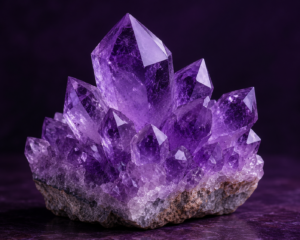
Common meanings: calm, intuition, spiritual protection and peaceful energy.
Amethyst is a purple variety of quartz and is one of the most popular gemstones in the world.
Basic Information
- Chemical composition: Silicon dioxide (SiO₂)
- Color: Light lavender to deep violet-purple
- Hardness: 7 on the Mohs scale
- Crystal system: Trigonal
- Birthstone: February
- Sources: Brazil, Uruguay, Zambia, Madagascar, Russia, and parts of the United States
Color
The purple color comes from trace amounts of iron within the crystal structure and natural irradiation over time. Colors can range from pale lilac to rich royal purple.
Metaphysical Associations
While not scientifically proven, amethyst is traditionally associated with:
- Calmness and stress relief
- Spiritual growth
- Intuition and wisdom
- Protection from negative energy
- Better sleep and dream recall
Historical Significance
- Ancient Greeks believed amethyst protected against intoxication. The word amethyst comes from the Greek amethystos, meaning “not drunk.”
- It was once considered as valuable as rubies and sapphires until large deposits were discovered in South America.
Care and Cleaning
- Clean with warm soapy water and a soft brush.
- Avoid prolonged exposure to direct sunlight, as the color may fade over time.
- Store separately from harder gemstones to prevent scratching.
Interesting Fact
Large amethyst geodes can weigh hundreds or even thousands of kilograms and are often displayed as decorative pieces in homes, museums, and crystal shops.
If you’re interested, I can also tell you about amethyst’s spiritual meanings, its value and pricing, or how to identify real vs. fake amethyst.
Aventurine
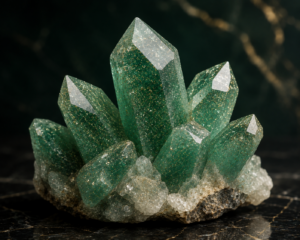
Common meanings: luck, growth, confidence and heart energy.
Aventurine is a variety of quartz known for its shimmering appearance, called aventurescence, caused by tiny mineral inclusions that reflect light.
Basic Information
- Chemical composition: Silicon dioxide (SiO₂)
- Hardness: 6.5–7 on the Mohs scale
- Crystal system: Trigonal
- Luster: Vitreous with sparkling inclusions
Colors
Aventurine comes in several colors:
- Green (most common) – colored by fuchsite (a chromium-rich mica)
- Blue
- Red
- Orange
- Yellow
- Brown
Sources
Major deposits are found in:
- India (especially green aventurine)
- Brazil
- Russia
- China
- Tanzania
Metaphysical Associations
Although not scientifically verified, aventurine is commonly associated with:
- Luck and prosperity
- Opportunity and success
- Confidence and leadership
- Emotional healing
- Optimism and personal growth
Green aventurine is often called the “Stone of Opportunity” and is popular among those seeking abundance or good fortune.
Historical Uses
- Used for jewelry, carvings, beads, and decorative objects for centuries.
- The name comes from the Italian a ventura, meaning “by chance,” referring to the accidental discovery of aventurine glass, which resembles the stone’s sparkle.
Care and Cleaning
- Clean with warm water and mild soap.
- Avoid harsh chemicals and prolonged exposure to extreme heat.
- Store separately from softer stones to prevent scratching.
Interesting Fact
Natural aventurine’s sparkle comes from mineral inclusions inside the stone, whereas goldstone (often mistaken for aventurine) is a man-made glass containing metallic particles that create a similar glittering effect.
B
Black Obsidian
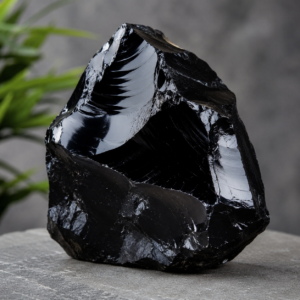
Common meanings: protection, grounding, truth and energetic clearing.
Black Tourmaline
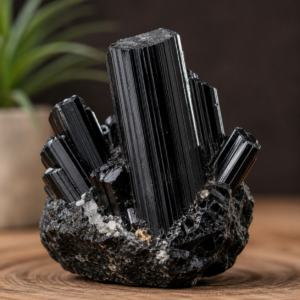
Common meanings: protection, grounding and energetic boundaries.
Black Tourmaline (also known as Schorl) is one of the most popular protective stones in the crystal world. It is a crystalline boron silicate mineral and is valued for both its appearance and durability.
Basic Information
- Chemical composition: Complex boron silicate mineral
- Color: Opaque black
- Hardness: 7–7.5 on the Mohs scale
- Crystal system: Trigonal
- Luster: Vitreous (glassy) to resinous
Sources
Major deposits are found in:
- Brazil
- Pakistan
- Afghanistan
- United States
- Madagascar
- Africa (especially Namibia and Mozambique)
Physical Properties
- Often forms long, striated crystal columns.
- Can naturally exhibit piezoelectric properties, meaning it can generate a small electrical charge under pressure.
- More durable than obsidian, making it suitable for jewelry and everyday carrying.
Metaphysical Associations
While not scientifically proven, Black Tourmaline is traditionally associated with:
- Protection from negative energy
- Grounding and stability
- Emotional balance
- Stress reduction
- Creating energetic boundaries
Many people place Black Tourmaline near entryways, workspaces, or electronic devices as a symbolic protective stone.
Historical Uses
- Used as a talisman for protection in various cultures.
- Ancient magicians reportedly used black tourmaline to shield against negative influences.
- In the 18th century, Dutch traders used tourmaline’s electrical properties to attract and remove ash from their pipes.
Care and Cleaning
- Clean with warm water and mild soap.
- Avoid harsh chemicals.
- Although durable, it can fracture if dropped on a hard surface.
- Many crystal collectors cleanse it symbolically using moonlight, sound, or smoke rituals.
Black Tourmaline vs. Black Obsidian
| Black Tourmaline | Black Obsidian |
|---|---|
| Crystalline mineral | Volcanic glass |
| Hardness 7–7.5 | Hardness 5–5.5 |
| Rough, striated texture | Smooth, glassy texture |
| Associated with grounding and protection | Associated with truth and emotional release |
| More durable | More fragile |
Interesting Fact
Black Tourmaline is one of the most commonly recommended grounding stones and is often paired with Amethyst (for calm and intuition) and Green Aventurine (for luck and opportunity) in crystal collections.
C
Carnelian
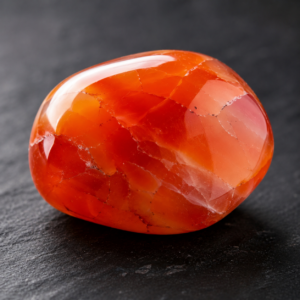
Common meanings: motivation, courage, creativity and confidence.
Carnelian Crystal
Carnelian is a vibrant orange to reddish-orange variety of chalcedony, a microcrystalline form of quartz. It has been prized for thousands of years for its rich color and use in jewelry, amulets, and carvings.
Basic Information
- Chemical Composition: Silicon Dioxide (SiO₂)
- Mineral Family: Chalcedony (Quartz)
- Hardness: 6.5–7 on the Mohs scale
- Crystal System: Trigonal
- Luster: Waxy to vitreous
- Transparency: Translucent to opaque
Color
Carnelian ranges from:
- Pale orange
- Bright orange
- Deep reddish-orange
- Brownish-red
Its color comes from iron oxide impurities within the stone.
Sources
Major deposits are found in:
- India
- Brazil
- Uruguay
- Madagascar
- United States
- Germany
- Russia
Historical Significance
Carnelian has a long history dating back over 4,000 years:
- Ancient Egyptians called it the “Sunset Stone.”
- Used in amulets, seals, and jewelry by Egyptians, Greeks, and Romans.
- Warriors sometimes carried carnelian as a symbol of courage and strength.
Metaphysical Associations
While not scientifically proven, crystal enthusiasts often associate Carnelian with:
- Motivation and ambition
- Courage and confidence
- Creativity and passion
- Vitality and energy
- Positive life choices
It is commonly linked to the Sacral Chakra, which is associated with creativity, emotions, and personal power.
Care and Cleaning
- Clean with warm soapy water and a soft cloth.
- Avoid harsh chemicals and ultrasonic cleaners.
- Keep away from prolonged direct sunlight to preserve color.
- Store separately from harder gemstones to avoid scratches.
Interesting Fact
Because of its warm, fiery appearance, Carnelian is often called the “Stone of Motivation” and is one of the most popular crystals for artists, performers, and entrepreneurs seeking confidence and creative inspiration. 🔥🧡
Carnelian vs Red Jasper
| Carnelian | Red Jasper |
|---|---|
| Translucent | Opaque |
| Bright orange-red | Deep earthy red |
| Glassy/waxy appearance | Matte appearance |
| Associated with creativity | Associated with endurance and stability |
Keywords: Courage • Confidence • Creativity • Energy • Motivation • Passion 🧡🔥
Clear Quartz
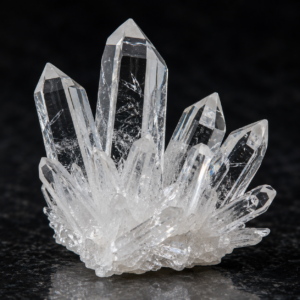
Common meanings: clarity, focus, amplification and cleansing.
Clear Quartz Crystal
Clear Quartz is one of the most abundant and versatile crystals on Earth. Known as the “Master Healer,” it is prized for its clarity, beauty, and ability to be cut into many shapes.
Basic Information
- Chemical Composition: Silicon Dioxide (SiO₂)
- Mineral Family: Quartz
- Hardness: 7 on the Mohs scale
- Crystal System: Trigonal
- Luster: Vitreous (glassy)
- Transparency: Transparent to translucent
Appearance
Clear Quartz is typically:
- Colorless and transparent
- Naturally forms six-sided prism crystals with pointed terminations
- Sometimes contains inclusions, rainbows, or internal fractures that add unique beauty
Sources
Major deposits are found in:
- Brazil
- Madagascar
- United States
- Switzerland
- China
- Arkansas (famous for high-quality clear quartz)
Historical Significance
- Ancient Greeks believed Clear Quartz was permanently frozen ice sent by the gods.
- Used by many cultures for carvings, jewelry, tools, and spiritual practices.
- Crystal balls were traditionally made from clear quartz.
Metaphysical Associations
While not scientifically proven, Clear Quartz is commonly associated with:
- Energy amplification
- Mental clarity
- Focus and concentration
- Spiritual growth
- Manifestation and intention-setting
Many crystal enthusiasts use Clear Quartz to amplify the energy of other crystals.
Chakra Association
- Crown Chakra (primary)
- Sometimes associated with all chakras due to its perceived amplifying qualities.
Care and Cleaning
- Clean with warm water and mild soap.
- Avoid prolonged exposure to intense sunlight, which may affect some inclusions.
- Can be safely cleansed and recharged using moonlight or other preferred crystal practices.
Interesting Facts
- Quartz is used in watches, computers, radios, and electronics because of its piezoelectric properties.
- Clear Quartz can focus light and was historically used in lenses and optical instruments.
- It is one of the most commonly collected and used crystals worldwide.
Clear Quartz vs Amethyst
| Clear Quartz | Amethyst |
|---|---|
| Transparent/colorless | Purple |
| Associated with clarity and amplification | Associated with calmness and intuition |
| Most abundant quartz variety | Purple quartz variety |
| Linked to all chakras | Primarily linked to Crown and Third Eye chakras |
Keywords: Clarity • Amplification • Focus • Healing • Energy • Manifestation ✨🔮🤍
Citrine
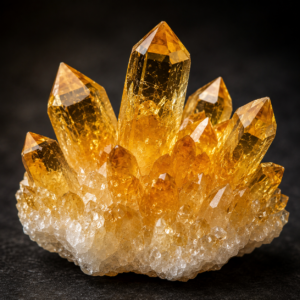
Common meanings: abundance, joy, confidence and positive energy.
Citrine Crystal
Citrine is a golden-yellow variety of quartz known for its warm, sunny color. It is often called the “Merchant’s Stone” or “Success Stone” because it is traditionally associated with prosperity, abundance, and positive energy.
Basic Information
- Chemical Composition: Silicon Dioxide (SiO₂)
- Mineral Family: Quartz
- Hardness: 7 on the Mohs scale
- Crystal System: Trigonal
- Luster: Vitreous (glassy)
- Transparency: Transparent to translucent
Color
Natural citrine ranges from:
- Pale yellow
- Golden yellow
- Honey gold
- Amber
- Brownish-orange
Its color is caused by traces of iron within the quartz crystal.
Sources
Major sources include:
- Brazil
- Madagascar
- Zambia
- Russia
- Bolivia
- United States
Natural vs Heat-Treated Citrine
- Natural Citrine: Usually pale yellow and relatively rare.
- Heat-Treated Citrine: Often created by heating amethyst or smoky quartz, resulting in deeper orange or amber colors. Much of the citrine sold today is heat-treated.
Historical Significance
- Used in jewelry since ancient Greece and Rome.
- Popular during the Art Deco era of the 1920s and 1930s.
- Traditionally carried as a talisman for success and protection.
Metaphysical Associations
While not scientifically proven, citrine is commonly associated with:
- Prosperity and abundance
- Confidence and self-esteem
- Motivation and success
- Creativity
- Joy and optimism
Chakra Association
- Solar Plexus Chakra (primary)
- Sometimes linked to the Sacral Chakra
Care and Cleaning
- Clean with warm water and mild soap.
- Avoid prolonged direct sunlight, which may fade the color over time.
- Store separately from softer gemstones.
Interesting Facts
- Citrine is one of the traditional November birthstones.
- Unlike many crystals, citrine is said by crystal enthusiasts to retain positive energy and rarely require energetic cleansing.
- Large natural citrine crystals are significantly rarer than amethyst.
Citrine vs Yellow Topaz
| Citrine | Yellow Topaz |
|---|---|
| Quartz family | Topaz family |
| Hardness 7 | Hardness 8 |
| More affordable | Usually more expensive |
| Golden to amber yellow | Yellow to golden-orange |
| Often heat-treated | Usually naturally colored |
Keywords: Abundance • Prosperity • Confidence • Success • Positivity • Joy ☀️💛✨
F
H
Hematite
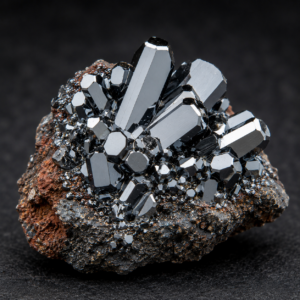
Common meanings: grounding, stability, strength and focus.
Hematite Crystal
Hematite is a metallic-looking iron oxide mineral known for its shiny silver-black appearance and strong connection to grounding and stability. Despite its metallic look, the name comes from the Greek word haima, meaning “blood,” because powdered hematite produces a reddish-brown streak.
Basic Information
- Chemical Composition: Iron Oxide (Fe₂O₃)
- Mineral Family: Oxide
- Hardness: 5.5–6.5 on the Mohs scale
- Crystal System: Trigonal
- Luster: Metallic to earthy
- Color: Steel gray, silver-black, black, reddish-brown
Appearance
Hematite can be found as:
- Highly polished metallic stones
- Sparkling clusters (specular hematite)
- Botryoidal (“kidney ore”) formations
- Red earthy masses
Sources
Major deposits are found in:
- Brazil
- Australia
- United States
- Canada
- England
- South Africa
Historical Significance
- Used as a red pigment in prehistoric cave paintings.
- Ancient Egyptians used hematite in jewelry and carvings.
- Roman soldiers reportedly carried hematite amulets for protection.
Metaphysical Associations
While not scientifically proven, hematite is commonly associated with:
- Grounding and stability
- Protection
- Courage and confidence
- Focus and concentration
- Balancing emotions
Chakra Association
- Root Chakra ❤️🖤
Care and Cleaning
- Wipe with a soft cloth.
- Avoid soaking in water for long periods, especially polished pieces.
- Keep away from harsh chemicals.
- Store carefully to prevent scratches.
Interesting Facts
- Hematite is one of the most important ores of iron.
- It is surprisingly heavy for its size due to its high iron content.
- Many “magnetic hematite” beads sold commercially are actually a man-made material called hematine.
Hematite vs Black Obsidian
| Hematite | Black Obsidian |
|---|---|
| Metallic silver-black | Glossy black glass |
| Iron oxide mineral | Volcanic glass |
| Heavy for its size | Relatively lightweight |
| Associated with grounding | Associated with truth and protection |
| Produces a red streak when scratched on unglazed ceramic | Does not |
Keywords: Grounding • Protection • Stability • Focus • Confidence • Strength 🖤⚙️✨
L
Labradorite
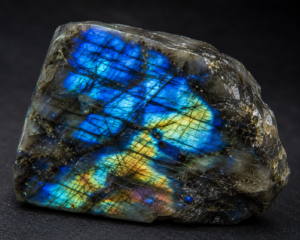
Common meanings: intuition, transformation, protection and mystery.
Labradorite Crystal
Labradorite is a stunning feldspar mineral famous for its iridescent flashes of color, known as labradorescence. When light hits the stone at different angles, it can display brilliant blue, green, gold, orange, and even violet flashes.
Basic Information
- Chemical Composition: Calcium Sodium Aluminum Silicate
- Mineral Family: Feldspar
- Hardness: 6–6.5 on the Mohs scale
- Crystal System: Triclinic
- Luster: Vitreous to pearly
- Transparency: Translucent to opaque
Appearance
Labradorite is usually:
- Gray, dark gray, or black in its base color
- Known for flashes of:
- Electric blue 💙
- Green 💚
- Gold 💛
- Orange 🧡
- Purple 💜
The colorful flash is caused by light reflecting from internal layers within the crystal.
Sources
Major deposits are found in:
- Canada (Labrador, where it was first discovered)
- Madagascar
- Finland
- Russia
- Norway
- United States
Historical Significance
- First identified in Labrador, Canada, in the 1770s.
- Inuit legends say the Northern Lights were trapped within the stone.
- Long valued as a decorative and spiritual stone.
Metaphysical Associations
While not scientifically proven, Labradorite is often associated with:
- Transformation and personal growth
- Intuition and psychic awareness
- Protection
- Creativity
- Strength during change
Because of these associations, it is often called the “Stone of Transformation.”
Chakra Associations
- Third Eye Chakra 👁️
- Crown Chakra 👑
Care and Cleaning
- Clean with warm water and a soft cloth.
- Avoid harsh chemicals.
- Protect from hard impacts, as feldspar can chip.
- Store separately to preserve its polished surface.
Interesting Facts
- Finland produces a particularly vibrant variety called Spectrolite, which can show nearly every color of the rainbow.
- No two pieces display exactly the same flash pattern.
- High-quality Labradorite with strong blue flash is especially prized by collectors and jewelry makers.
Labradorite vs Moonstone
| Labradorite | Moonstone |
|---|---|
| Blue/green/gold flashes | Soft white-blue glow |
| Dark gray base color | White, cream, or peach base |
| Labradorescence | Adularescence |
| More dramatic color play | Softer shimmer |
Keywords: Transformation • Intuition • Protection • Magic • Creativity • Inner Strength ✨🌈🦋
Lapis Lazuli
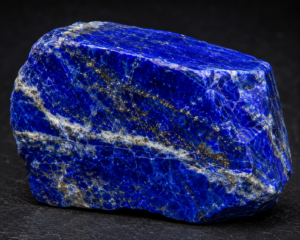
Common meanings: wisdom, truth, communication and inner vision.
Lapis Lazuli Crystal
Lapis Lazuli is a deep blue metamorphic rock prized since ancient times for its intense color and golden flecks of pyrite. It has been treasured for thousands of years as a gemstone, pigment, and ornamental stone.
Basic Information
- Composition: Primarily Lazurite, with Calcite and Pyrite
- Mineral Type: Rock (not a single mineral)
- Hardness: 5–5.5 on the Mohs scale
- Color: Royal blue to deep ultramarine blue
- Luster: Dull to vitreous
Appearance
Lapis Lazuli is known for:
- Rich royal-blue color 💙
- Golden pyrite flecks that resemble stars ✨
- Occasional white calcite veining
The most valuable specimens have an intense blue color with minimal white calcite.
Sources
Major deposits are found in:
- Afghanistan (the finest quality material)
- Chile
- Russia
- Pakistan
- United States
Historical Significance
- Used in ancient Egypt for jewelry, amulets, and burial masks.
- The famous funerary mask of Tutankhamun contains lapis lazuli.
- Ground into powder to create ultramarine, one of the most expensive blue pigments in history.
Metaphysical Associations
While not scientifically proven, Lapis Lazuli is often associated with:
- Wisdom and truth
- Self-awareness
- Communication
- Intuition
- Inner peace
It is sometimes called the “Stone of Wisdom.”
Chakra Associations
- Third Eye Chakra 👁️
- Throat Chakra 🗣️
Care and Cleaning
- Clean with a soft, slightly damp cloth.
- Avoid harsh chemicals and prolonged soaking.
- Store separately to prevent scratches.
- Keep away from extreme heat.
Interesting Facts
- Lapis Lazuli has been mined in Afghanistan for over 6,000 years.
- Unlike quartz crystals, it is actually a rock made of multiple minerals.
- The golden sparkle seen in many specimens comes from tiny crystals of pyrite, often called “fool’s gold.”
Lapis Lazuli vs Sodalite
| Lapis Lazuli | Sodalite |
|---|---|
| Often contains gold pyrite flecks | Usually no pyrite |
| More valuable | Generally less expensive |
| Deep royal blue | Blue with white veining |
| Used since ancient Egypt | More commonly used in modern jewelry |
Keywords: Wisdom • Truth • Communication • Intuition • Insight • Self-Expression 💙✨👁️
M
Moonstone
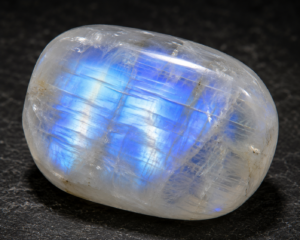
Common meanings: intuition, cycles and emotional balance.
Moonstone Crystal
Moonstone is a beautiful feldspar gemstone known for its soft, glowing shimmer called adularescence. This floating, moon-like light effect gives the stone its magical appearance and is the reason for its name.
Basic Information
- Mineral Family: Feldspar
- Chemical Composition: Potassium Aluminum Silicate
- Hardness: 6–6.5 on the Mohs scale
- Crystal System: Monoclinic
- Luster: Pearly to vitreous
- Transparency: Transparent to translucent
Appearance
Moonstone commonly appears in:
- White 🤍
- Cream
- Peach 🧡
- Gray 🩶
- Blue 💙
- Rainbow Moonstone 🌈
The most prized specimens display a strong blue glow across the surface.
Sources
Major deposits are found in:
- Sri Lanka (famous for blue moonstone)
- India
- Madagascar
- Myanmar
- Australia
- Tanzania
Historical Significance
- Ancient Romans believed moonstone was formed from solidified moonlight.
- In many cultures it has been associated with love, intuition, and protection during travel.
- It became especially popular during the Art Nouveau period in jewelry design.
Metaphysical Associations
While not scientifically proven, moonstone is often associated with:
- Intuition and inner wisdom
- Emotional balance
- New beginnings
- Feminine energy
- Calmness and self-discovery
It is often called the “Stone of New Beginnings.”
Chakra Associations
- Crown Chakra 👑
- Third Eye Chakra 👁️
- Sometimes associated with the Heart Chakra 💚
Care and Cleaning
- Clean gently with warm water and mild soap.
- Avoid ultrasonic and steam cleaners.
- Protect from hard impacts, as moonstone can chip or crack.
- Store separately from harder gemstones.
Interesting Facts
- The shimmering effect, called adularescence, is caused by light scattering between microscopic layers within the stone.
- Rainbow Moonstone is technically a variety of labradorite, though it is often sold as moonstone.
- Moonstone is one of the traditional June birthstones.
Moonstone vs Labradorite
| Moonstone | Labradorite |
|---|---|
| Soft white-blue glow | Bright flashes of blue, green, gold |
| Light-colored body | Dark gray body |
| Adularescence | Labradorescence |
| Associated with intuition and emotions | Associated with transformation |
Keywords: Intuition • New Beginnings • Emotional Balance • Feminine Energy • Calm • Inner Wisdom 🌙✨🤍
Q
Quartz
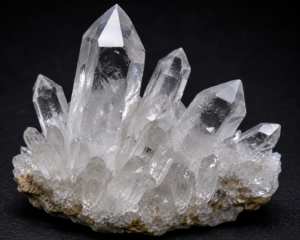
Common meanings: amplification, clarity, cleansing and spiritual focus.
Quartz Crystal
Quartz is one of the most abundant and versatile minerals on Earth. It comes in many varieties, including Clear Quartz, Amethyst, Citrine, Rose Quartz, Smoky Quartz, and Aventurine.
Basic Information
- Chemical Composition: Silicon Dioxide (SiO₂)
- Mineral Family: Quartz
- Hardness: 7 on the Mohs scale
- Crystal System: Trigonal
- Luster: Vitreous (glassy)
- Transparency: Transparent to opaque
Appearance
Quartz can be found in many colors:
- Clear 🤍 (Clear Quartz)
- Purple 💜 (Amethyst)
- Pink 🩷 (Rose Quartz)
- Yellow 💛 (Citrine)
- Brown/Gray 🤎 (Smoky Quartz)
- Green 💚 (Aventurine)
Quartz crystals typically form six-sided prisms ending in pointed tips.
Sources
Quartz is found worldwide, including:
- Brazil
- Madagascar
- United States
- China
- India
- Switzerland
Historical Significance
- Ancient civilizations used quartz for tools, jewelry, and carvings.
- Clear Quartz was once believed to be permanently frozen ice.
- Quartz has been used in watches and electronics for over a century.
Metaphysical Associations
While not scientifically proven, quartz is commonly associated with:
- Energy amplification
- Clarity and focus
- Healing
- Spiritual growth
- Manifestation
Because of these associations, Clear Quartz is often called the “Master Healer.”
Care and Cleaning
- Clean with warm water and mild soap.
- Quartz is relatively durable but can still chip if dropped.
- Store separately from softer stones to avoid scratching them.
Interesting Facts
- Quartz is used in watches, computers, radios, and many electronic devices because of its piezoelectric properties.
- It is one of the most common minerals in Earth’s crust.
- Large quartz crystals can grow several meters long under the right conditions.
Common Quartz Varieties
| Variety | Color | Associated Qualities |
|---|---|---|
| Clear Quartz | Clear | Clarity, amplification |
| Amethyst | Purple | Calm, intuition |
| Rose Quartz | Pink | Love, compassion |
| Citrine | Yellow | Prosperity, confidence |
| Smoky Quartz | Brown/Gray | Grounding, protection |
| Aventurine | Green | Luck, opportunity |
Keywords: Clarity • Amplification • Healing • Focus • Energy • Versatility ✨🔮🤍
R
Rose Quartz
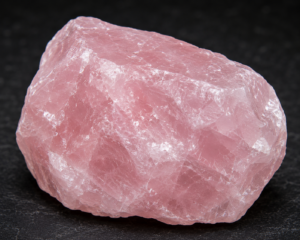
Common meanings: love, compassion, self-love and emotional healing energy.
Rose Quartz Crystal
Rose Quartz is a soft pink variety of quartz known as the “Stone of Love.” It is one of the most popular crystals and is often associated with compassion, emotional healing, and self-love.
Basic Information
- Chemical Composition: Silicon Dioxide (SiO₂)
- Mineral Family: Quartz
- Hardness: 7 on the Mohs scale
- Crystal System: Trigonal
- Luster: Vitreous (glassy)
- Transparency: Transparent to translucent, often cloudy
Appearance
Rose Quartz ranges in color from:
- Very pale pink 🌸
- Soft baby pink 🩷
- Deep rosy pink 🌹
Most Rose Quartz is translucent with a gentle, cloudy appearance, though rare specimens can be nearly transparent.
Sources
Major deposits are found in:
- Brazil
- Madagascar
- South Africa
- India
- Namibia
- United States
Historical Significance
- Ancient Egyptians used Rose Quartz in beauty rituals and facial masks.
- Greeks and Romans associated it with love and reconciliation.
- It has been used in jewelry and decorative carvings for thousands of years.
Metaphysical Associations
While not scientifically proven, Rose Quartz is commonly associated with:
- Unconditional love
- Self-love
- Compassion
- Emotional healing
- Forgiveness
- Harmony in relationships
Because of these associations, it is often called the “Heart Stone.”
Chakra Association
- Heart Chakra 💚🩷
Care and Cleaning
- Clean with warm water and mild soap.
- Avoid prolonged exposure to direct sunlight, as the pink color may fade.
- Store carefully to prevent scratches on polished surfaces.
Interesting Facts
- The pink color is believed to come from microscopic mineral inclusions within the quartz.
- Some rare Rose Quartz displays a star effect called asterism when cut into a cabochon.
- It is one of the most popular crystals used in jewelry and home décor.
Rose Quartz vs Clear Quartz
| Rose Quartz | Clear Quartz |
|---|---|
| Pink | Colorless/clear |
| Associated with love and compassion | Associated with clarity and amplification |
| Heart Chakra | Crown Chakra |
| Usually translucent | Often transparent |
Keywords: Love • Self-Love • Compassion • Emotional Healing • Peace • Kindness 🩷✨🌹
S
Selenite
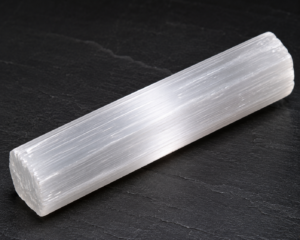
Common meanings: cleansing, clarity, peace and spiritual light.
Selenite Crystal
Selenite is a translucent variety of the mineral gypsum and is prized for its pearly glow and satin-like appearance. It is named after Selene, the Greek goddess of the Moon, due to its soft, moonlike sheen.
Basic Information
- Chemical Composition: Calcium Sulfate Dihydrate (CaSO₄·2H₂O)
- Mineral Family: Gypsum
- Hardness: 2 on the Mohs scale
- Crystal System: Monoclinic
- Luster: Pearly to silky
- Transparency: Transparent to translucent
Appearance
Selenite is commonly found in:
- Clear or white 🤍
- Satin white with a silky glow
- Peach 🧡
- Orange
- Rarely gray or green
It often forms in long blade-like crystals, wands, towers, and beautiful fibrous structures.
Sources
Major deposits are found in:
- Morocco
- Mexico
- United States
- Australia
- Greece
- Poland
Historical Significance
- Used as a decorative stone for centuries.
- Ancient cultures sometimes used thin sheets of selenite as window panes because of its transparency.
- Giant selenite crystals found in Mexico’s Cave of the Crystals are among the largest crystals ever discovered.
Metaphysical Associations
While not scientifically proven, Selenite is often associated with:
- Mental clarity
- Peace and calm
- Spiritual awareness
- Energy cleansing
- Meditation and relaxation
It is often called the “Stone of Light.”
Chakra Associations
- Crown Chakra 👑
- Third Eye Chakra 👁️
Care and Cleaning
⚠️ Selenite is very soft and water-sensitive.
- Do not soak in water.
- Clean gently with a dry or slightly damp cloth.
- Handle carefully to avoid scratches and chips.
- Store away from harder crystals.
Interesting Facts
- Selenite can be scratched with a fingernail because of its low hardness.
- Some specimens display a glowing effect called chatoyancy (cat’s-eye effect).
- The giant crystals in Mexico’s Cave of the Crystals reach lengths of over 11 meters (36 feet).
Selenite vs Clear Quartz
| Selenite | Clear Quartz |
|---|---|
| Hardness 2 | Hardness 7 |
| Gypsum mineral | Quartz mineral |
| Soft, silky glow | Glassy, transparent |
| Water-sensitive | Water-safe |
| Often used for cleansing rituals | Often used for amplification and clarity |
Keywords: Peace • Clarity • Light • Calm • Cleansing • Spiritual Awareness 🤍✨🌙
Smoky Quartz
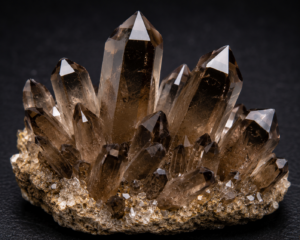
Common meanings: grounding, protection, release and stability.
Smoky Quartz Crystal
Smoky Quartz is a beautiful brown to gray-black variety of quartz known for its smoky, translucent appearance. It is one of the most popular grounding stones and is often associated with stability, protection, and resilience.
Basic Information
- Chemical Composition: Silicon Dioxide (SiO₂)
- Mineral Family: Quartz
- Hardness: 7 on the Mohs scale
- Crystal System: Trigonal
- Luster: Vitreous (glassy)
- Transparency: Transparent to translucent
Appearance
Smoky Quartz ranges in color from:
- Light smoky gray 🩶
- Brown 🤎
- Deep smoky brown
- Nearly black (Morion variety) 🖤
Its color develops naturally from exposure to radiation within the Earth’s crust.
Sources
Major deposits are found in:
- Brazil
- Scotland
- Switzerland
- Madagascar
- United States
- Australia
Historical Significance
- Scotland’s national gemstone is a variety of Smoky Quartz called Cairngorm.
- Used for centuries in jewelry, ornaments, and ceremonial objects.
- Ancient cultures often carried it as a protective talisman.
Metaphysical Associations
While not scientifically proven, Smoky Quartz is often associated with:
- Grounding and stability
- Protection from negative energy
- Stress relief
- Emotional balance
- Letting go of what no longer serves you
It is commonly called the “Stone of Grounding.”
Chakra Association
- Root Chakra ❤️🖤
Care and Cleaning
- Clean with warm water and mild soap.
- Durable enough for everyday jewelry.
- Store separately from softer minerals to prevent scratches.
Interesting Facts
- Smoky Quartz is a naturally irradiated form of quartz.
- The darkest variety, known as Morion, can appear almost completely black.
- Large Smoky Quartz crystals weighing several tons have been discovered in the Swiss Alps.
Smoky Quartz vs Black Tourmaline
| Smoky Quartz | Black Tourmaline |
|---|---|
| Transparent to translucent | Opaque |
| Brown to black | Deep black |
| Quartz mineral | Tourmaline mineral |
| Hardness 7 | Hardness 7–7.5 |
| Associated with grounding and release | Associated with protection and grounding |
Keywords: Grounding • Protection • Stability • Stress Relief • Strength • Resilience 🤎✨🌿
T
Tiger’s Eye
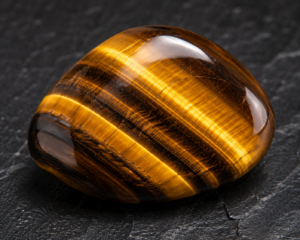
Common meanings: courage, confidence, protection and personal power.
Tiger’s Eye Crystal
Tiger’s Eye is a golden-brown gemstone known for its silky shine and moving band of light called chatoyancy (the cat’s-eye effect). It has been valued for centuries as a stone of courage, confidence, and protection.
Basic Information
- Chemical Composition: Silicon Dioxide (SiO₂)
- Mineral Family: Quartz
- Hardness: 6.5–7 on the Mohs scale
- Crystal System: Trigonal
- Luster: Silky to vitreous
- Transparency: Opaque
Appearance
Tiger’s Eye typically displays:
- Golden brown 🤎💛
- Honey gold
- Reddish brown
- Dark brown bands
Its distinctive shimmering effect appears to move as the stone is turned in the light.
Sources
Major deposits are found in:
- South Africa
- Australia
- India
- Namibia
- United States
- Brazil
Historical Significance
- Ancient Roman soldiers carried Tiger’s Eye for courage in battle.
- It was traditionally worn as a protective talisman against ill fortune.
- Many cultures associated it with strength, focus, and clear judgment.
Metaphysical Associations
While not scientifically proven, Tiger’s Eye is often associated with:
- Confidence and courage
- Personal power
- Motivation
- Protection
- Decision-making
- Grounding and balance
It is commonly known as the “Stone of Courage.”
Chakra Associations
- Solar Plexus Chakra ☀️
- Root Chakra ❤️🖤
Care and Cleaning
- Clean with warm water and mild soap.
- Avoid harsh chemicals.
- Store separately from softer stones to prevent scratches.
Interesting Facts
- Tiger’s Eye forms when quartz gradually replaces a fibrous mineral called crocidolite while retaining its structure.
- The silky bands create the famous cat’s-eye effect.
- Red Tiger’s Eye and Blue Tiger’s Eye (Hawk’s Eye) are related varieties.
Tiger’s Eye vs Tiger Iron
| Tiger’s Eye | Tiger Iron |
|---|---|
| Mainly quartz | Mixture of Tiger’s Eye, Hematite, and Jasper |
| Golden-brown shimmer | Multicolored layers |
| More uniform appearance | Banded red, gold, and metallic silver |
| Common in jewelry | Popular for decorative pieces |
Keywords: Courage • Confidence • Protection • Focus • Strength • Motivation 🐅✨🤎💛
Crystal Safety Note
Not every crystal is safe for water, sunlight or skin contact. Selenite, malachite, pyrite and some softer stones should usually be kept dry.