
A tarot reading journal gives you somewhere to notice how you interpret images, which questions keep returning and what changes when you revisit an entry. You can use it as a reflective practice without trying to predict events. The useful material is often quite ordinary: a detail you overlooked, an assumption you caught or a small action you chose for yourself.
Start with a notebook or a private digital document. Leave room beneath each entry for a later note, and let a few honest sentences be enough.
Begin with a question you can explore
Choose a question about your own attention, choices or habits. Questions that demand certainty can make it difficult to separate reflection from prediction.
- Instead of “Will this project succeed?”, try “What part of this project needs my attention?”
- Instead of “What does this person secretly think?”, try “What am I assuming, and what could I ask them directly?”
- Instead of “What will happen this week?”, try “What would I like to approach more deliberately this week?”
Write the question before drawing. If it changes afterwards, keep both versions so you can see how the image influenced your thinking.
Separate what you see from what you make of it
Give your entry two short sections: “On the card” and “My interpretation”. This distinction is the heart of a reflective tarot journal.
Under “On the card”, describe visible details: colours, objects, posture, direction of gaze, background and spacing. “A person faces away from two other figures” is an observation. “They feel excluded” is an interpretation.
Under “My interpretation”, record the associations those details bring up for you. Use phrases such as “This reminds me of…” or “I wonder whether…”. If you consult a guidebook, label that meaning separately. Your first impression, the printed explanation and the situation you are considering do not need to agree.
Use a short, repeatable entry
A consistent structure makes entries easier to compare without turning journalling into an elaborate daily obligation. Try these headings:
- Date and context: What is on my mind? What am I bringing to the reading?
- Question and card: Record the question, deck and card name.
- On the card: List three details I can actually see.
- My interpretation: What associations am I making?
- Another possibility: How else could I read the same image?
- Outside the cards: What do I know from direct evidence, and what remains unknown?
- One small action: What practical step, if any, would be useful?
One card is enough for this exercise. You can also finish an entry with “No action needed”.
Try an example without turning it into a forecast
Imagine the card you draw shows someone working at a bench. Your question is: “What deserves more attention in my creative project?”
Observation: The figure is looking down at their work. Several similar objects are nearby.
Interpretation: This makes me think about practising one skill rather than starting another idea.
Alternative: Repetition could also remind me to take a break and look at the whole project.
Direct evidence: I have three unfinished drafts and have not reviewed them together.
Action: Spend fifteen minutes comparing those drafts and choose one to develop.
The action comes from your circumstances and judgement. Nothing in the entry establishes whether the finished project will succeed.
Return to the entry without rewriting it
Revisit an entry after a few days or once the situation has changed. Add a dated note rather than editing your original interpretation to fit the outcome.
Ask: What did I notice afterwards? Which assumption proved unfounded? Did I take the action? Was it helpful, or would a different approach have suited me better?
When reviewing several entries, look for recurring questions or habits in your own responses. A repeated card can be a prompt for reflection; it does not establish a future event or reveal another person’s private thoughts.
Keep the practice proportionate
If you feel pulled into drawing repeatedly until you get a reassuring answer, close the journal and return another time. Keep identifying details about other people to a minimum, especially in shared documents.
Do not use cards to make medical, legal or financial decisions. Use relevant evidence and qualified advice for those matters. Your journal can hold curiosity and uncertainty together, with room to change your mind.
A printable companion for your reflections
If you prefer a ready-made layout, our Moonmargin Studio Tarot Reflection Journal is a 12-page A4 printable PDF with single-card and three-card reflection prompts, card-study pages and space to revisit your entries. It costs £4.99 and is for personal use. Print the pages you need; no physical journal or tarot cards are supplied. You can also use the free entry structure above in a notebook you already own.
Choose a notebook you will actually use
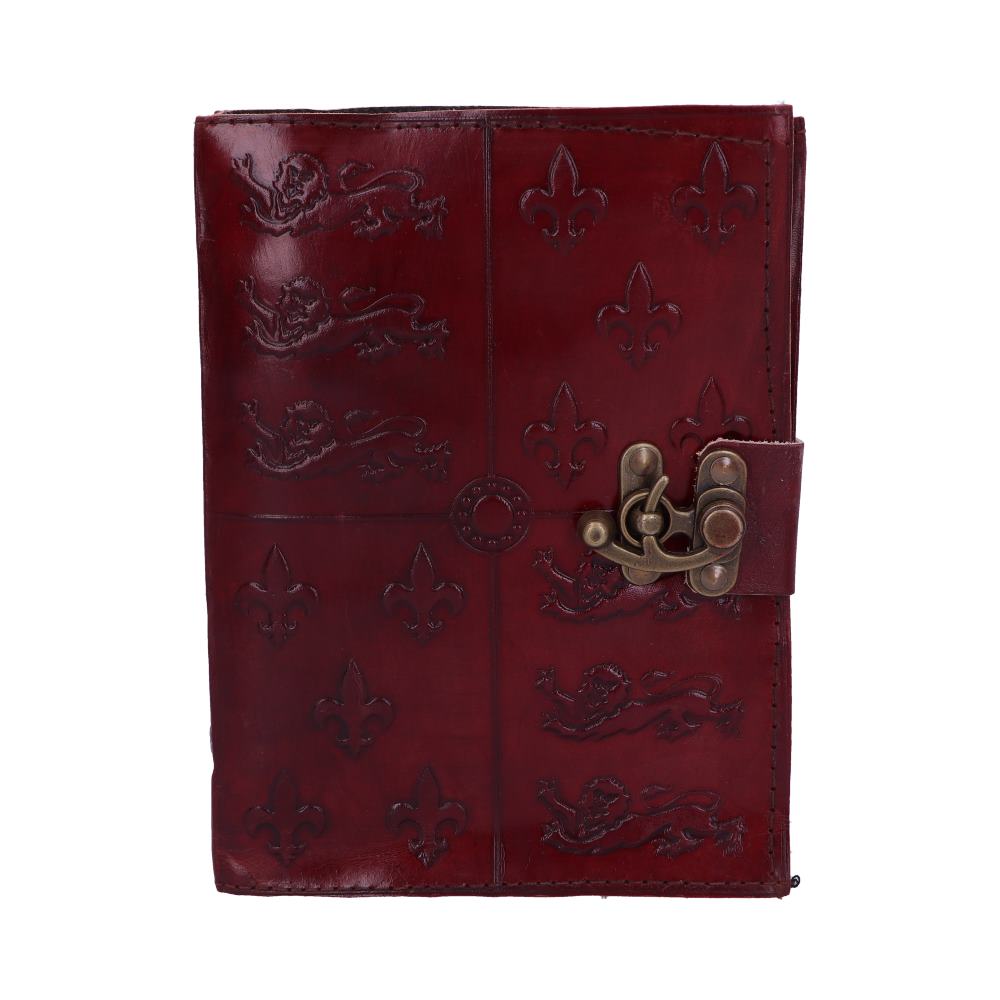
A decorative cover is optional. If you would like the journal pictured above, view the Medieval Leather Journal in our witchy shop. You can also give this practice a section in an existing notebook rather than buying another.
For a wider notebook structure, see how to start a grimoire. Keep the cards themselves away from drinks, food and ink while you write; our tarot and oracle card care guide covers everyday handling and storage.